When a Chicagoan gets hungry, the decision happens on a phone in under a minute. They thumb in “tacos near me,” “best deep dish open now,” or “romantic dinner Wicker Park,” glance at the map, scan the photos and star ratings, and tap. Restaurant SEO is the discipline of owning that split-second moment—making sure your dining room, not the spot two blocks over, is the one that gets the reservation.
Discovery has moved almost entirely to Google Search, Google Maps, and increasingly to AI assistants. Diners search by craving, by neighborhood, by occasion, and by dietary need, and they trust the listings with current photos, real reviews, a readable menu, and a working “Reserve” or “Order” button. If your restaurant is hard to find or looks neglected online, you are quietly handing covers to competitors—and to the delivery apps that charge you for the privilege.
This page lays out exactly how we earn that visibility for Chicago restaurants, from independent storefronts in Pilsen to multi-location groups across the city.
Why SEO Delivers Strong ROI for Restaurants
Restaurants run on thin margins and full covers, which makes the economics of organic search especially attractive. A guest who finds you through Google and books directly costs you nothing per head. The same guest arriving through a delivery marketplace can cost you 15–30% of the ticket in commission, and a cover booked through some reservation platforms carries a per-seat fee on top. Over a busy month in Chicago, those middleman fees add up to real money pulled straight out of your bottom line.
Local search visibility flips that equation. Once you rank in the map pack for “brunch Logan Square” or hold a strong organic position for “steakhouse near River North,” those guests come to you directly—you keep the full check, the relationship, and the chance to turn a first-timer into a regular. Unlike a paid promotion that vanishes the moment you stop funding it, rankings and a strong review profile compound and keep working.
Every cover you fill through your own search visibility is a cover you did not pay a delivery app or marketplace to deliver. For most Chicago restaurants, shifting even a fraction of demand from rented platforms to owned organic search is the single most profitable marketing move available.
There is a second, quieter payoff: foot traffic. A huge share of restaurant searches in Chicago end with a “directions” tap, not a reservation—the walk-in who searched “ramen open now” from a few blocks away. Strong local SEO captures that impulse demand that paid advertising rarely reaches.
The Chicago Market for Restaurants
Few cities have a dining scene as deep—or as competitive—as Chicago. The challenge is hyper-local: a diner searching from the West Loop is choosing among the Randolph Street Restaurant Row heavyweights, while someone in Pilsen wants authentic Mexican within walking distance and a guest in Chinatown is comparing dim sum houses block by block. Generic, city-wide SEO loses to competitors who target these neighborhoods specifically.
Each district has its own search personality. River North skews toward upscale and date-night dining and tourist traffic. Wicker Park and Logan Square reward trendy, brunch-heavy, cocktail-forward spots that photograph well. The West Loop competes on chef-driven prestige. Mapping your content and Google Business Profile to the way your actual neighborhood searches is what separates the restaurants that fill on a Tuesday from the ones that wait for the weekend.
Chicago dining is also brutally seasonal, and that seasonality is a search opportunity. Demand for “outdoor dining” and “rooftop patio” explodes the moment the weather breaks, festival season sends foot traffic surging through Wicker Park Fest, Taste of Chicago, and the Pilsen and Logan Square street fests, and twice a year Chicago Restaurant Week drives a citywide spike in “prix fixe” and “restaurant week menu” searches. Restaurants that publish patio, festival, and Restaurant Week content ahead of these waves capture demand their competitors scramble to chase.
Game-day and event demand is a goldmine most Chicago restaurants ignore. Searches for “where to eat before a Cubs game,” “bars near United Center,” and “dinner near the Lyric” spike on a predictable calendar. A single well-built guide page can quietly own that traffic year-round.
Restaurant Types We Optimize
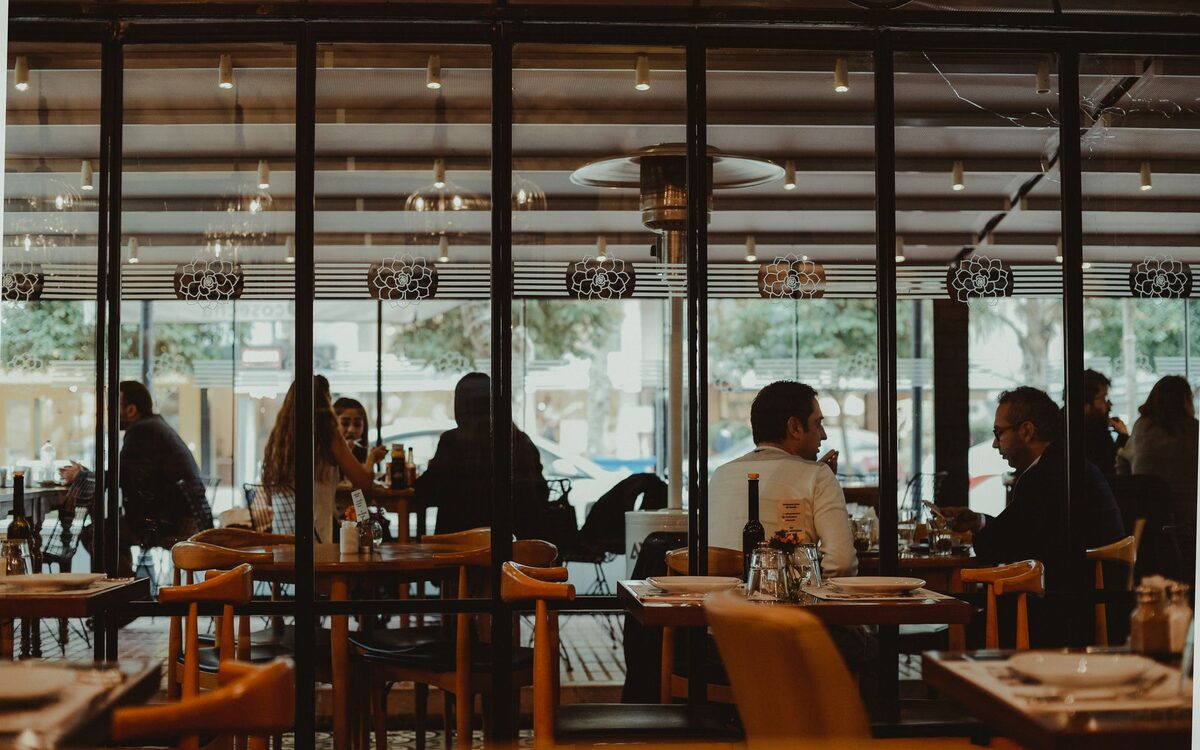
Every concept searches differently, and we tailor the strategy to yours. We build restaurant SEO programs for:
- Fine dining & chef-driven concepts — tasting menus, special-occasion and date-night searches, prestige and award signals
- Casual & neighborhood restaurants — everyday “near me” demand, family-friendly and brunch traffic
- Ethnic & cuisine-specific spots — Mexican in Pilsen, dim sum in Chinatown, Polish on the Northwest Side, Italian in River North, and every cuisine in between
- Cafes, bakeries & coffee shops — morning and “open now” searches, wifi and study-spot intent
- Bars, breweries & cocktail lounges — happy hour, late-night, and event-adjacent searches
- Food trucks & pop-ups — location-of-the-day visibility and social-to-search funnels
- Catering & private events — high-value corporate and celebration inquiries that never come through delivery apps
- Multi-location restaurant groups — distinct local presence for each neighborhood under one brand
Whatever your concept, we layer in neighborhood, cuisine, and occasion modifiers so you capture both broad city searches and the specific, lower-competition queries that convert.
Local SEO for Restaurants
For restaurants, local SEO is not one tactic among many—it is the whole game. The map pack of three listings that Google shows above the organic results is the most valuable real estate in restaurant search, and earning a spot there takes a deliberate program.
Google Business Profile optimization
Your profile is your digital storefront, and most restaurants barely scratch its potential. We dial in the right primary and secondary categories, upload and refresh high-quality photos of the food, room, and exterior, keep hours and holiday hours accurate, and wire in the attributes diners filter on—outdoor seating, reservations, takeout, vegan options, wheelchair accessibility. Critically, we connect your menu, reservation link, and online-ordering link directly to the profile so a hungry searcher can act without ever leaving Google.
Reviews & reputation
Reviews are both a top ranking factor and the deciding vote for a diner choosing between two listings. We build ethical systems that prompt happy guests to review at the right moment, plus response frameworks that turn every review—the glowing and the critical—into a public trust signal. Recency and volume matter, so a steady drip beats an occasional flood.
Citations, Maps & food directories
Consistent name, address, and phone data across Yelp, TripAdvisor, OpenTable, Resy, and core Chicago and food directories reinforces your legitimacy to Google. We audit and fix the conflicting listings—old addresses, wrong hours, duplicate entries—that quietly suppress most restaurants’ map rankings.
Neighborhood landing pages
For groups and restaurants on a district border, dedicated pages tuned to the communities you serve—West Loop, River North, Wicker Park, Logan Square, Hyde Park—let you rank for “[cuisine] [neighborhood]” searches a single homepage can never reach.
Content Strategy for Restaurants
Content is what lets a restaurant rank for the hundreds of specific things diners search beyond your name. The goal is not a busy blog—it is a focused set of pages that answer real cravings and occasions:
- A full, crawlable menu page with described dishes, prices, and dietary tags—not a buried PDF—so Google can read every item you serve.
- Private events and catering pages that capture high-value, high-margin inquiries marketplaces never send you.
- Seasonal and holiday content — patio season, Valentine’s and Mother’s Day reservations, New Year’s Eve, Restaurant Week menus.
- Local guides — “best brunch in Logan Square,” “where to eat before a show in the Loop,” “late-night food in Wicker Park”—the searches that pull in discovery-stage diners.
Write your menu in plain HTML, not a PDF or an image. A text menu lets Google index every dish, which means you can show up when someone searches “birria tacos near me” or “gluten-free pasta River North”—exactly the high-intent searches a flat PDF makes invisible.
E-E-A-T for Restaurants
Google rewards content that demonstrates real Experience, Expertise, Authoritativeness, and Trustworthiness, and restaurants have natural advantages here that most never use. The proof of a great restaurant is everywhere—you just have to make it legible to search engines and to AI.
We strengthen your credibility by surfacing a genuine review profile across Google, Yelp, and the platforms diners trust; by capturing press, “best of” lists, and local food-media mentions in the structure of your site; and by telling the chef and owner story that gives your concept a face and a point of view. On the technical side, we implement Restaurant and Menu schema (plus reviews and opening hours) so search engines and AI assistants understand precisely what you serve, where, when, and how guests rate it. Authenticity and accuracy are not just brand values for a restaurant—they are ranking signals.
AI Search: How Chicago Diners Find Restaurants Now
The way people choose where to eat is shifting again. Google’s AI Overviews increasingly answer questions like “what’s a good date-night spot in the West Loop?” with a curated shortlist, ChatGPT and other assistants make restaurant recommendations on request, and Google Maps surfaces AI-assisted suggestions tuned to a diner’s location and filters. A guest may decide where to eat from an AI answer without ever scrolling a traditional results page.
The restaurants that get recommended in this environment share a profile: clean structured data, an accurate and detailed Google Business Profile, a readable menu, and a strong, recent body of reviews. AI systems lean on exactly the signals that win classic local SEO—clarity, consistency, and trust—which is why we build for both at once. Get the fundamentals right and you show up whether the diner is using blue links, a map, or a chatbot.
If your menu is locked in a PDF or your reviews have gone stale, AI assistants have little to work with—and they will recommend the competitor whose data is clean and current. Being machine-readable is fast becoming as important as being well-reviewed.
Common SEO Problems With Restaurant Websites
Most Chicago restaurants we audit are losing covers to the same fixable mistakes:
- PDF or image-only menus — invisible to Google, so you never rank for the specific dishes diners search.
- JavaScript-only sites — flashy single-page builds that search engines and AI struggle to crawl, hiding your menu and hours.
- A neglected Google Business Profile — wrong category, old photos, missing reservation and ordering links, unanswered reviews.
- Slow, heavy websites — oversized hero videos and bloated themes that fail Core Web Vitals on the phones nearly all diners use.
- Over-reliance on Yelp and delivery apps — renting traffic at a steep commission instead of owning search visibility.
- Inconsistent listings — conflicting addresses, hours, and phone numbers across platforms that confuse Google and customers alike.
Our audits pinpoint these issues with specifics—the exact pages, the exact fixes—and prioritize them by how many covers they are costing you.
| Discovery Channel | Who Owns the Guest | Cost Per Cover | Long-Term Value |
|---|---|---|---|
| Organic search & Google Maps | Your restaurant | Low — no per-cover fee | Compounds over time |
| Delivery marketplaces | The platform | 15–30% commission | Disappears if you pause |
| Paid reservation platforms | Shared | Per-cover or subscription fee | Ongoing rental |
| Paid search ads | Your restaurant | Per click, often high | Stops the moment budget ends |
Our Process & The Metrics That Matter
We run a transparent, milestone-driven engagement so you always know what we are doing and why—and how it shows up in your covers:
- Month 1 — Audit & FoundationTechnical and local audit, competitor analysis against your specific neighborhood rivals, keyword and cuisine mapping, and a full Google Business Profile overhaul with fresh photos, categories, and reservation links.
- Months 2–3 — BuildFix technical issues, replace PDF menus with crawlable text menus, deploy Restaurant and Menu schema, clean up citations, and launch the review-generation engine.
- Months 4–6 — AuthorityPublish seasonal, events, and local guide content, earn links and mentions from Chicago food media, expand neighborhood pages, and grow the review profile in volume and recency.
- Months 7–12 — ScaleDouble down on what is driving reservations, time content to Restaurant Week and patio season, expand into catering and private-events demand, and optimize the path from search to booked table.
And we measure what actually fills the dining room—not vanity metrics:
Rankings and traffic only matter if they fill seats. Every report we send ties back to reservations, direction requests, and direct orders—so you can see the real return on your Chicago SEO investment against what the apps were charging you.
Frequently Asked Questions
How long does restaurant SEO take to work in Chicago?
Restaurants often move faster than other industries because so much of the win is local. A well-optimized Google Business Profile with fresh photos and steady reviews can lift map-pack visibility within 4 to 8 weeks. Ranking organically for competitive terms like "best brunch West Loop" or "Italian restaurant River North" usually takes 4 to 8 months, depending on how crowded your cuisine and neighborhood are.
Is SEO worth it for a single-location Chicago restaurant?
Yes—arguably more so. A single location lives or dies on its immediate trade area, and local search is how today's diners decide where to eat tonight. Every reservation or walk-in you earn through organic search is a guest you did not pay a 15–30% delivery commission or a per-cover marketplace fee to reach, so the margins are dramatically better.
How do I rank in the Google Maps pack for my Chicago neighborhood?
The map pack rewards proximity, relevance, and prominence. We optimize your Google Business Profile with the right primary category, a complete menu, dozens of fresh photos, accurate hours, and reservation and ordering links, then build a steady stream of reviews and consistent citations across Yelp, TripAdvisor, OpenTable, and local Chicago directories. Neighborhood-specific content on your own site reinforces the relevance signals.
Should I rely on Yelp and DoorDash instead of my own SEO?
Those platforms have their place, but they rent you traffic at a steep price and own the customer relationship. When a diner finds you through your own search visibility, you keep the full check, the email address, the loyalty, and the data. We treat marketplaces as one channel—not your entire digital presence.
Do I need a blog for my restaurant?
You do not need a daily blog, but content earns rankings and AI recommendations. A handful of strong pages—your full menu with descriptions, a private-events page, seasonal and holiday content, and a few local guides like "where to eat before a Cubs game"—capture searches a one-page site never will.
Can you help a restaurant group with multiple Chicago locations?
Absolutely. Multi-location groups need a distinct, fully optimized Google Business Profile and a dedicated location page for each restaurant, plus a structure that prevents the locations from cannibalizing one another. We build that architecture so each neighborhood ranks on its own merits.
How do you measure restaurant SEO success?
We track outcomes that actually fill seats—reservation clicks, direction requests, menu views, phone calls, and online order starts—not just rankings. You see how organic visibility translates into covers, so you can judge the return against what you would have paid the delivery apps and reservation platforms.